

Windlasses are essential components of deck equipment, responsible for the safe handling of mooring and anchoring operations. Their reliability depends entirely on planned maintenance programmes and timely professional intervention. Proper yacht windlass maintenance not only prevents sudden failures during critical operations, but also significantly reduces operating costs in the long term. Owners and operators who invest in adequate maintenance protocols benefit from optimal performance, increased safety and a longer life for their investment.
Critical Windlass Components to Maintain
Modern marine windlasses combine complex mechanical, electrical and hydraulic systems that require specific attention. The main drum (or gypsy) is the central element around which the chain or line is wound, and it is subject to high mechanical stress during hauling operations. Pawls and gear wheels manage directional movement and prevent the load from running back uncontrolled, making them critical points for operational safety.
The electric motor or hydraulic system provides the power needed to lift heavy loads, and requires periodic checks of the electrical connections, the condition of the windings and the integrity of the hydraulic circuits. Auxiliary and deck machinery maintenance procedures include specific checks on these vital components.
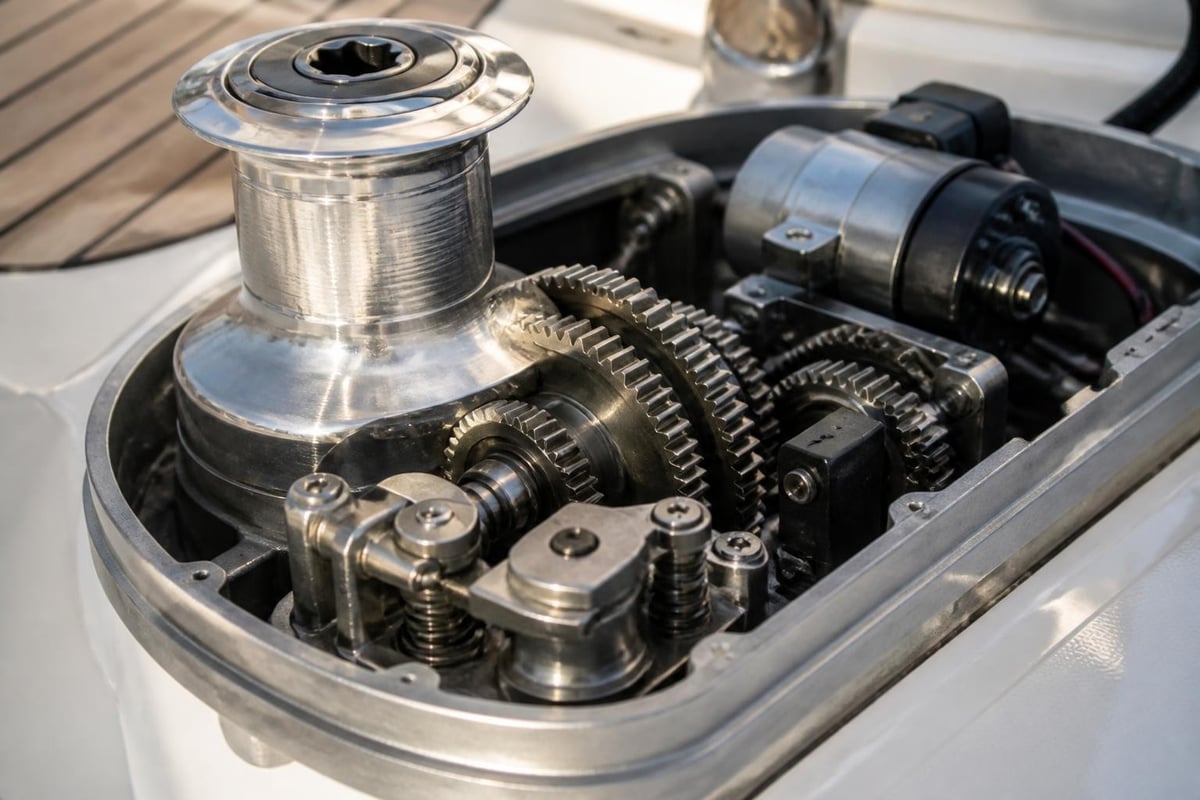
Seals and bearings ensure smooth movement and isolation from salt water, while the braking systems control the lowering speed under load. Each component requires a different maintenance approach based on its materials, operating stresses and environmental conditions of use.
Recommended Service Intervals
Scheduling interventions over time is a decisive factor in the effectiveness of yacht windlass maintenance. Daily checks include an external visual inspection to make sure there is no obvious damage, fluid leakage or build-up of crystallised salt. Rinsing with fresh water after every use in a marine environment removes salt deposits before they penetrate the internal mechanisms.
On a monthly basis during the operating season, all deck mounting bolts should be checked for tightness, the electrical cables inspected for integrity and the chains examined for signs of wear or deformation. Accessible grease points should be lubricated according to the manufacturer’s specifications, using washout-resistant marine greases.
Six-monthly servicing involves partial disassembly to reach the internal components, thorough cleaning of the gears and replacement of degraded lubricants. As highlighted in specialist guides on winch maintenance, this level of intervention requires specific technical skills and suitable equipment.
Once a year, preferably during winter lay-up, a complete overhaul is carried out: full disassembly, dimensional checks of wear-prone components, preventive replacement of seals and bearings, load testing and functional certification.
Operating Procedures for Professional Maintenance
Yacht windlass maintenance begins with photographic documentation of the initial condition and recording of the actual operating hours. The first operational step is to disconnect the electrical or hydraulic power supply, followed by the controlled release of any residual tension in spring-loaded systems. Removing the chain or line from the drum makes it easier to access the internal mechanical components.
Disassembly follows the sequences set out in the technical manuals, documenting the original position of each part to ensure correct reassembly. Initial cleaning uses marine solvents to remove salt, degraded grease and corrosion residues, followed by a detailed inspection under raking light to detect cracks, deformation or signs of mechanical fatigue.
Critical components are measured with precision gauges to verify that they are within dimensional tolerances. When measurements show wear beyond the permissible limits, preventive replacement avoids sudden failures during critical operations. Preventive maintenance of deck systems demands high quality standards, just like the mooring system maintenance in which Koreax specialises.
Lubrication Specific to the Marine Environment
Choosing the right lubricants determines how long windlasses keep operating in aggressive marine conditions. High-quality marine greases contain anti-corrosion additives and offer washout resistance and thermal stability over a wide temperature range. Gear tooth surfaces require extreme-pressure greases that maintain the lubricating film under high loads.
Ball or roller bearings need specific lubricants compatible with the materials of the cages and balls, while linear guide systems benefit from low-viscosity synthetic oils that ensure smooth movement even after periods of inactivity. The amount applied follows the principle of the optimal film, avoiding both under-lubrication, which causes accelerated wear, and excess lubricant, which attracts external contaminants.
Winter winch maintenance techniques emphasise the generous application of protective products during long periods of inactivity. Relubrication intervals range from thirty days under intensive operating conditions to six months for units used only occasionally in sheltered waters.
Preventive Diagnosis of Common Faults
Unusual noises during operation are early indicators of developing problems. A grinding metallic noise suggests misaligned or damaged gears, while a continuous hum points to possible bearing problems. Excessive vibration signals an imbalance in the drum or loosening of the structural fastenings, and calls for immediate action before the damage spreads.
Loss of power, showing up as progressive slowing under load, can be caused by worn clutches, degraded electric motors or insufficient hydraulic pressure. Intermittent locking of the drum points to problems with the safety pawls or debris build-up in the stopping mechanisms. An excessive operating temperature of the outer housing indicates mechanical overload, inadequate lubrication or failures in the cooling systems.
Galvanic corrosion occurs when dissimilar metals come into contact in the presence of a saline electrolyte, creating electrochemical cells that rapidly degrade the less noble components. Regular visual inspection identifies the first traces of oxidation before they compromise structural integrity. As pointed out by professional windlass maintenance services, timely intervention prevents costly escalation and safety risks.
Electrical and Hydraulic Systems
Windlass electrical circuits include components that are sensitive to moisture and salt corrosion. Relay contacts and circuit breakers require periodic cleaning with dielectric sprays and a check of contact resistance. Power cables need to be inspected for insulation abrasion, oxidised terminals or signs of overheating.
Electrical connections must be protected with marine heat-shrink sleeves and specific sealants that prevent water ingress. Electric motors benefit from periodic winding tests with a megohmmeter to verify the integrity of the insulation to earth. Yacht windlass maintenance includes thorough checks of these critical auxiliary systems.
Hydraulic systems have their own critical issues related to the quality of the working fluid. Periodic analysis of the hydraulic oil reveals contamination by water, metal particles or additive degradation. Filters must be replaced at set intervals or when the pressure gauges show excessive pressure drops. High-pressure flexible hoses have a limited life and need to be replaced preventively before the expiry date stamped on them.
Documentation and Traceability of Interventions
Systematically recording every maintenance intervention creates a valuable history that makes future planning easier and supports informed investment decisions. Digital or paper logbooks document dates, operating hours, replaced components, lubricants used and anomalies detected. Before-and-after photographs provide visual evidence of how the technical condition evolves.
Professional technical reports include dimensional measurements, functional test results, fluid analyses and recommendations for future work. This documentation takes on legal value in the event of accidents or insurance disputes, demonstrating that adequate maintenance standards have been applied. Professional owners implement computerised maintenance management systems that automatically generate reminders based on operating hours or calendar deadlines.
Regulations and Reference Standards
Yacht windlass maintenance must comply with international regulations that set minimum safety and reliability requirements. CE certification requires periodic load tests to verify that the original capacity and strength specifications are maintained. ISO 9001 standards applied to maintenance processes ensure traceability, technical competence and consistent quality of work.
Classification societies such as RINA, Lloyd’s Register and Bureau Veritas publish specific guidelines for deck systems, requiring documented periodic inspections and certifications issued by qualified technicians. Commercial and charter vessels must meet stricter requirements than private pleasure craft, with more frequent inspections and broader documentation obligations.
The European Machinery Directive requires risk assessments and the implementation of protective measures against mechanical, electrical and crushing hazards. Windlasses must include accessible emergency stop systems, protection against accidental start-up and clear safety signage. Maintenance work must preserve these original safety features without introducing new risks.
Technical Skills Required
The growing complexity of modern systems calls for multidisciplinary technical skills ranging from mechanics to electronics, and from hydraulics to metallurgy. Qualified technicians hold certified training on specific products, kept up to date through periodic courses offered by the manufacturers. In-depth knowledge of technical manuals, wiring diagrams and troubleshooting procedures is what sets professional work apart from risky trial-and-error attempts.
Using advanced diagnostic equipment such as vibration analysers, infrared thermal cameras, digital megohmmeters and micrometer gauges requires specific training and an understanding of how to interpret the results. Just like propeller shaft alignment services, which require micrometric precision, windlass maintenance benefits enormously from the use of digital measuring technologies.
Technicians must understand how complex systems work in order to diagnose faults that are not obvious, distinguishing between symptoms and root causes. The skills required include interpreting hydraulic schematics, reading wiring diagrams, calculating tightening torques and selecting the right spare parts in line with OEM specifications.
Spare Parts Management and Logistics
The timely availability of critical spare parts determines how long a vessel stays out of service and its overall operating efficiency. Professional owners keep strategic stocks of fast-wearing components such as seals, bearings, motor brushes and hydraulic filters. Correct identification requires precise references to the original part numbers to avoid dimensional or performance incompatibilities.
Specialist suppliers offer pre-packaged maintenance kits that include all the components needed for a complete overhaul, simplifying procurement and guaranteeing certified compatibility. Established relationships with authorised distributors ensure access to up-to-date technical documentation, engineering support and warranties on the components supplied.
Logistics become particularly critical for vessels operating in remote areas of the Mediterranean, where standard delivery times could disrupt operating schedules. Urgent delivery services and local technical support networks are decisive factors when choosing maintenance partners. As demonstrated by the approach of Koreax, with its advanced mobile workshops, the ability to intervene quickly anywhere in the Mediterranean basin drastically reduces downtime costs.
Maintenance Costs and Budgets
Proper financial planning prevents unpleasant surprises and makes the best use of the resources available. Maintenance costs are divided into predictable items, such as lubricants, seals and labour for scheduled work, and unexpected expenses caused by sudden failures or accidental damage. Systematic preventive maintenance significantly reduces the incidence of costly emergencies.
Annual budgets should allocate between two and five percent of the equipment’s value for intensively used vessels, rising to ten percent for older equipment or equipment operating in particularly demanding conditions. Deferred work rarely produces real savings; instead, it allows damage to spread and drives up future repair costs exponentially.
Comparative cost-benefit analyses between repair and replacement consider not only the immediate direct costs but also future reliability, availability of spare parts and regulatory compliance. An ageing windlass with obsolete components may make complete replacement economically justifiable, rather than continued investment in temporary repairs.
Emerging Technologies and Innovations
Latest-generation windlasses incorporate continuous electronic monitoring systems that detect operating anomalies in real time. Temperature, pressure, vibration and current sensors send data to central units that analyse trends and predict imminent failures. Condition-based maintenance strategies are gradually replacing fixed-interval servicing, optimising resources and reducing unnecessary downtime.
IoT (Internet of Things) technologies allow continuous remote monitoring even while under way, with automatic alerts sent via satellite when operating parameters exceed critical thresholds. Manufacturers offer proactive technical support services based on the analysis of telemetry data, recommending action before latent problems turn into full-blown failures.
Advanced composite materials and high-strength light alloys reduce overall weight while matching or exceeding traditional mechanical performance. Self-lubricating nanotechnology coatings minimise friction and resist corrosion without frequent maintenance. Technological innovations in marine services show how precision digital instrumentation is transforming traditional maintenance approaches.
3D printing makes it possible to quickly produce components that are no longer available on the market, extending the service life of older equipment that would otherwise be beyond repair. Digital reverse engineering techniques reconstruct complex geometries from worn parts, allowing faithful replication with improved modern materials.
Yacht windlass maintenance is an indispensable investment to ensure operational safety, reliability and long life for critical deck equipment. Combining systematic preventive protocols, qualified technical expertise and advanced diagnostic instrumentation turns maintenance management from a necessary burden into a measurable competitive advantage. For owners, shipyards and marine operators looking for a specialist partner able to deliver professional work with advanced mobile workshops and high-level technical expertise throughout the Mediterranean basin, Koreax is the ideal reference for advanced, reliable maintenance solutions.


